
Buying the land is the first half of the job. Here is a practical guide on how to build a house on an NA plot near Mumbai without losing your weekends to stress.
Start with the file of documents you need before drawing a line
Many Mumbai families buy a piece of land and then wait a few years before they start building. That is completely normal. At our 27 acre township in Atgaon, plot sizes run from 2,260 to 3,900 sq ft, and there is no deadline to start construction. When you decide you are ready to figure out how to build a house on an NA plot, your first job is paperwork, not bricks.
Because an NA plot is already converted for non agricultural use, you do not need a fresh conversion order. You do, however, need a clean set of property papers so your architect can apply for building permission for your specific house design.
- Your registered sale deed or agreement for sale showing the land is freehold and in your name.
- The NA order confirming the plot is approved for residential construction.
- The sanctioned town planning layout showing your specific plot number, the boundary measurements, and the internal road width.
- The latest revenue records and tax receipts showing clear title with no disputes.
Why a serviced plot saves you the hardest six months
If you buy a standalone piece of land outside a township, your first six months of building are not about the house at all. You spend that time applying for an electric meter, digging a borewell, building an approach road so trucks can reach your gate, and figuring out where the sewage will go.
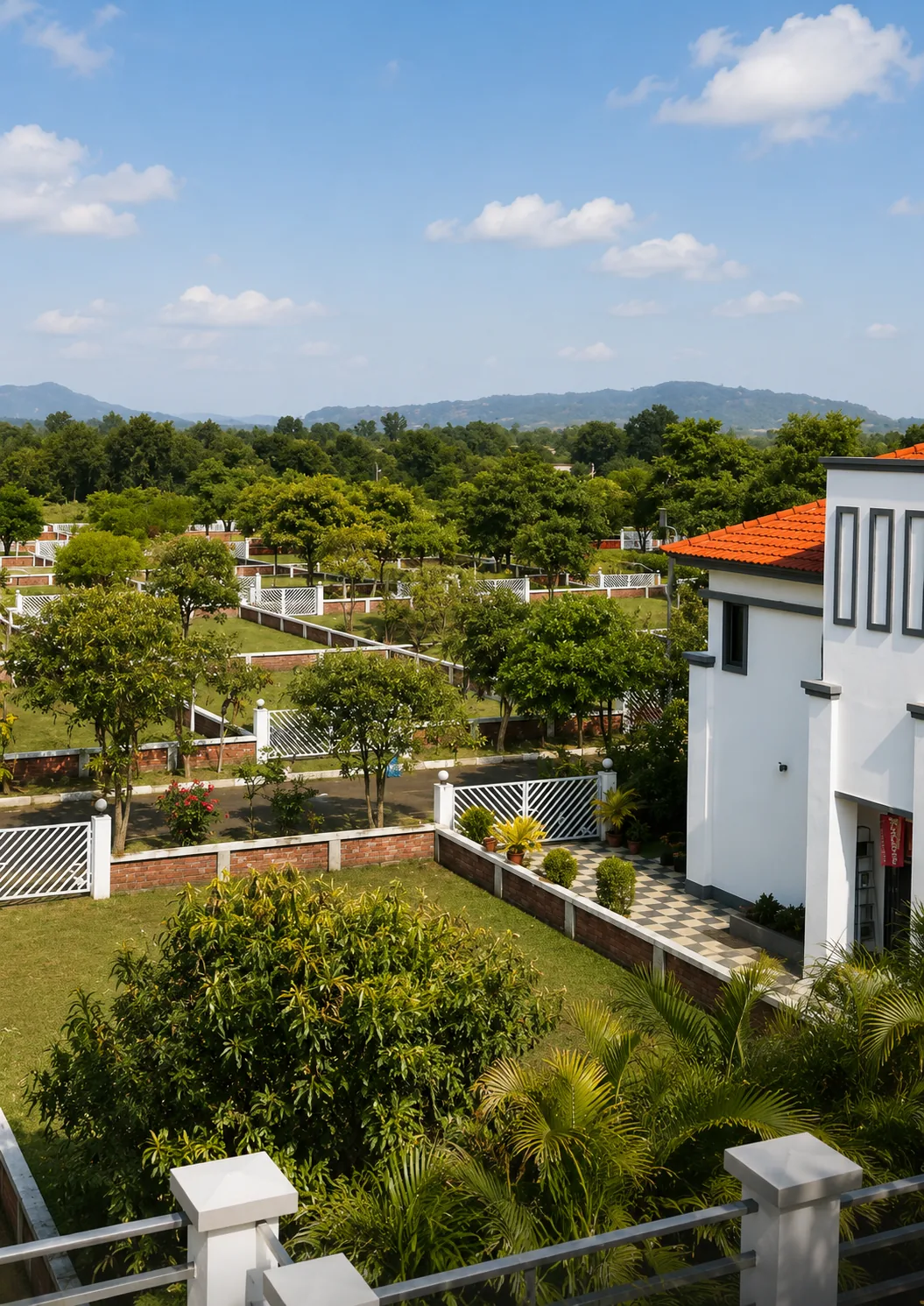
In a ready township like Atgaon, this part of the work is already done. The 9 m and 12 m tar roads are laid with LED street lights. Water connections, electricity, and underground drainage are already at the plot boundary. The compound wall and 24 hour security at the main gate mean your building material sits safely inside a guarded perimeter.
There is another quiet advantage here. Atgaon has an open clubhouse with air conditioned guest rooms and the La Casa restaurant. When you drive 80 km from Mumbai or 60 km from Thane to check on your site, you have a clean place to eat, use the washroom, or stay the night before your own walls are up.
Choosing an architect and checking the ground
You will need a registered architect and a structural engineer. Pick someone who has built independent houses in the Mumbai to Nashik belt before, rather than someone who only does city apartment interiors. A local experienced architect knows the town planning rules for margins, height limits, and roof slopes in Shahapur taluka.
Before the engineer draws the foundation, ask for a soil test on your exact plot. Even inside the same layout, one plot might hit hard rock four feet down while another has deeper soft soil. Knowing where the hard strata sits tells the engineer how deep the footings must go, so you neither overspend on steel and concrete nor risk cracks later.
Once you approve the floor plans and elevations, your architect submits the structural drawings and your property file to the local competent authority for individual building plan sanction. Do not dig a single trench until that stamped approval is in your hand.
The order of work on site
Building a house follows a strict sequence. If you understand how to build a house on an NA plot in the right order, you will know when to visit the site from Mumbai and when your contractor does not need you there.
You do not need to visit every weekend. The important trips are when the plot corners are marked, before the foundation concrete is poured, when the brick walls go up so you can stand inside the rooms to feel the size, and when electrical and plumbing points are marked on the walls.
- Site clearing and line out: marking the exact corners of the house and digging the foundation pits.
- Substructure: pouring the concrete footings, building up to the plinth level, filling with compacted stone and soil, and pouring the plinth beam.
- Superstructure: raising the RCC columns, beams, and roof slabs, followed by brickwork for the walls.
- Concealed work: cutting grooves in the brick walls for water pipes and electrical conduits before plastering.
- Plastering and waterproofing: internal and external plaster, plus thorough waterproofing of the roof terrace, bathrooms, and any swimming pool shell.
- Finishes: flooring, window frames, doors, bathroom fittings, kitchen platform, painting, and connecting your home lines into the township water, power, and underground drainage.
Planning around the Shahapur monsoon and realistic timelines
The belt around Bhatsa Dam and Tansa gets heavy rain from June to September. That rain is the reason the hills stay green, and it also dictates your construction calendar. You cannot dig foundations or do external plaster and painting in the middle of a downpour.
The smartest calendar starts paperwork and architectural design during the monsoon, around July or August. By October, when the soil dries out, your approvals are ready and excavation can begin immediately. If you get the foundation, columns, roof slab, and outer walls completed between October and May, your house is sealed before the next rains arrive. Your contractor can then spend the monsoon months working indoors on flooring, wiring, bathrooms, and carpentry.
In total, expect a straightforward single storey or two storey weekend villa to take a full cycle of dry and wet seasons from the day you appoint an architect to the day you turn the key. Anyone who promises a built house in four months is skipping curing time for the concrete, which leads to damp walls later.
What to do before you start
If you already own a plot, ask the developer for a clean checklist of documents required for building plan submission and check if there are township guidelines on boundary walls or external paint colours. If you are still looking for land, visit a site where roads and services are already working rather than promised on a brochure.
At Atgaon, our freehold NA plots start from ₹49 lakh, with a developer payment facility of ₹50,000 a month on select plots where the land is registered in your name from booking. Come out on a Saturday, walk the tarred roads, look at the villas other owners have already built, and see how a finished layout makes building your own home much simpler.
Read next
- Freehold, NA, Clear Title — What Actually Matters When You Buy Land Near Mumbai
- NA Plot Near Mumbai or Agricultural Land: Which Can You Build On?
- How the ₹50,000-a-Month Plan Works (It's Not a Loan)
- See Atgaon, with prices and photos
*Payment facility offered by the developer. Not a loan, a credit facility or an assured return scheme. Terms apply. Construction rules and approval processes are general guidance, not legal advice.
See how owners are building at Atgaon
Drive down to walk the 27 acre layout, see the completed roads and clubhouse, and check the plot documents in person.
Talk to our team →