
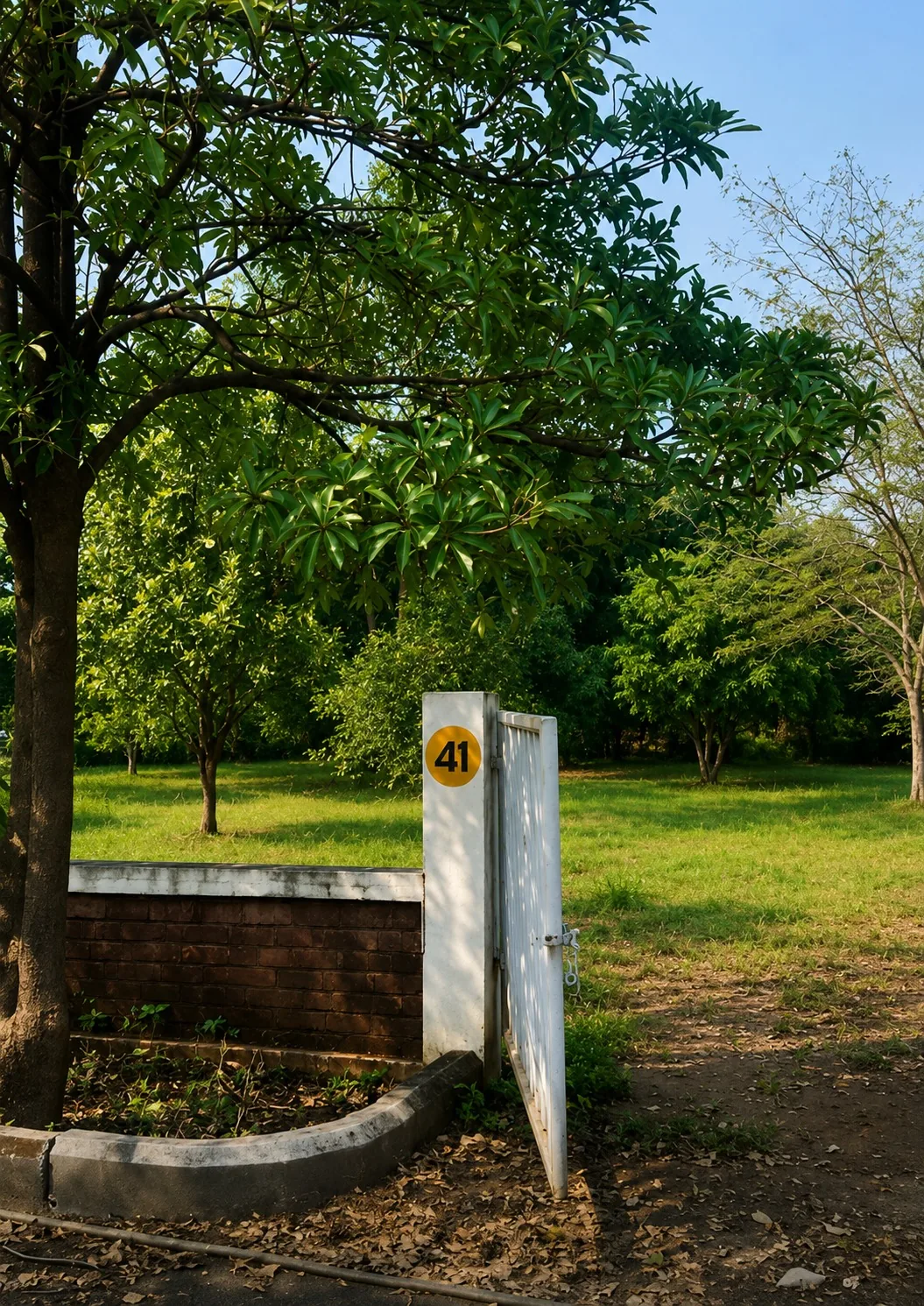
When you look at family land in Maharashtra, you need to know whether it is still held jointly or divided through a vatani patra. Here is how partition works on paper and on the ground, and what to check before you pay.
What joint holding means when you look at family land
When you go to see a piece of land outside Mumbai or Thane, the person showing it may point to a corner by the road and say that part is his share. On the revenue record, however, you may see four or five family names listed together on a single 7/12 extract (satbara utara).
When family land is held jointly, every co owner has a share in the whole land. No single person owns a specific physical corner of it until a legal division takes place. Even if brothers have put up a fence or farmed separate strips for years, the law treats the entire plot as one shared holding until it is formally divided.
A partition, called vatani or vatap in Marathi, divides the joint holding so that each co owner gets a separate, defined piece of land in their own name. Once that is done, each person owns their specific portion outright rather than an undivided fraction of the whole.
How a partition differs from a heirship entry or a release deed
Buyers can confuse three different family land records because they all happen among relatives. Understanding the difference keeps you from accepting the wrong paper when you check the title.
A heirship entry (varas nond) happens after an owner passes away. It simply replaces the deceased person's name with the names of all the legal heirs on the same 7/12 extract. It brings the heirs onto the record together, which creates a joint holding rather than dividing the land.
A release deed (hakka sod patra) is used when one or more co owners give up their share in favour of the remaining co owners. The land stays together in fewer hands. You can read more about how these two steps work in our guides on varas nond and the release deed (hakka sod patra). A partition is the step that actually splits the land into separate physical pieces for each owner.
The three ways family land is partitioned in Maharashtra
In Maharashtra, there are three usual ways a family can legally divide joint land so that the revenue records reflect separate ownership.
A family arrangement that was only agreed orally, or written on plain or notarised paper, is weak evidence, and revenue officers usually do not make separate 7/12 entries from it. The three proper ways are these.
- A registered partition deed (vatani patra) signed by all the co owners at the sub registrar office. This works for any type of property when the family agrees on who gets which portion.
- An application to the Tahsildar for agricultural land. Where farm land is held jointly, the co holders can apply to the Tahsildar under the land revenue code. The Tahsildar can divide the holding among them and order separate revenue entries.
- A decree from a civil court. If the family members do not agree on how to divide the land, any co owner can file a partition suit, and the court decrees how the property is to be split.
Why every co owner including daughters must be part of the division
When your lawyer reads a vatani patra or a Tahsildar partition order, the first check is whether every single co owner listed on the revenue record signed and consented. If five people are on the 7/12 and only four signed the deed, the partition is incomplete.
For Hindu families, under the Hindu Succession (Amendment) Act, 2005, daughters have equal rights with sons in joint family property by birth. Even if a sister is married and lives in another city, she holds a legal share unless she has formally given it up through a registered document or received her share in the division.
A partition that leaves out a sister, a widow, or the children of a deceased sibling can be challenged in court later. Even after you buy and build, a left out family member can file a claim asking for their share of the land. For agricultural land, the division must also respect the Maharashtra fragmentation rules on minimum plot size. A partition cannot slice farm land into tiny pieces below the standard area set for that zone.
What happens on the 7/12 and on the ground after partition
Signing a vatani patra or getting a Tahsildar order is only the legal instruction to divide the land. The physical and revenue separation happens in the steps that follow.
First, a mutation entry (ferfar) is recorded in the village register to note the partition document. Second, the land must be officially measured and sub divided on the village map. This sub division measurement is called pot hissa mojani. We explain how government surveyors mark boundaries in our guide on mojani land measurement.
Once the measurement and mutation are complete, the old single 7/12 extract is split. Each co owner gets a separate 7/12 extract in their sole name, carrying its own sub division number, along with a map showing the exact boundaries of that piece on the ground.
What to check if you are buying one co owner's share
If a seller tells you he is selling his share of family land, ask to see whether the partition is already finished or only talked about. Both situations require specific checks before you pay a token.
Before you rely on any document, confirm the current rule and stamp duty position with the sub registrar office, the Talathi, or your property lawyer.
If you would rather avoid multi owner farm titles altogether, we offer individual numbered plots at Nature's Nest by Pool City at Atgaon, and the project document set is shared on request so your lawyer can verify the title chain. For family land, ask your lawyer to check these points.
- Check for a separate 7/12 extract. If the partition is complete, the seller's name alone will appear as the owner on a separate 7/12 with its own sub division number.
- Check the boundary stones on the ground. Ask for the pot hissa mojani map so you know the exact piece being shown to you matches the official sub division.
- Check what happens if the land is still joint. If all family names still sit on one 7/12, either the family must complete the partition first, or every single co owner must join and sign your sale deed.
- Check how you will reach the piece. When a large plot is split into three or four pieces, the back portions can lose road access. Make sure the partition deed gives your piece a legal access path, and read our guide on right of way to land for how road access is recorded.
Read next
- Varas Nond: Heirship Entry on the 7/12 Explained
- Hakka Sod Patra (Release Deed) in Maharashtra Explained
- Mojani Process in Maharashtra: A Land Buyer's Plain Guide
- See Atgaon, with prices and photos
*This article is general guidance for home and land buyers and is not legal or tax advice. Revenue laws and procedures change; always have an independent property lawyer verify all title, heirship and partition documents before making any payment.
Want to see individual NA plots with documents ready for your lawyer?
Visit us on the Mumbai to Nashik belt or ask for the project document set before you plan a drive.
WhatsApp usCall +91 70426 33644Other ways to reach us